
Saudization: Tribulation and Inspiration
Updated: May 12
Understanding the challenges and opportunities of workforce nationalization in Saudi Arabia
Saudization affects every business operating in KSA and its obligations continue to grow.
The nationalization concept itself is simple enough, a government mandated drive to provide ever greater opportunities for its own people, particularly in countries with large expatriate populations. In Saudi the approach, slightly simplified, is that a minimum percentage of Saudi nationals must be employed within a Saudi company’s total workforce. (There are also some specific roles that can only be done by Saudis). And that minimum percentage varies depending on the type of work being performed by the company. It’s not a new idea of course, with countries from across the world having implemented similar nationalization policies previously (several in the GCC, but also across Africa from North to South and even as far afield as Malaysia and India).
But change is rarely easy and even more so when it affects the beating heart of any business – its people...
At AEI Saudi we have helped, quite literally, thousands of companies to prepare for and best handle their Saudization obligations as they enter or continue to succeed in the Kingdom. Not all these conversations have been straight forward and often start with a client perception that Saudization is a source of tribulation. But there are a few hints and tips which everyone should know and I hope might provide some inspiration to those still working through their Saudization Strategy.
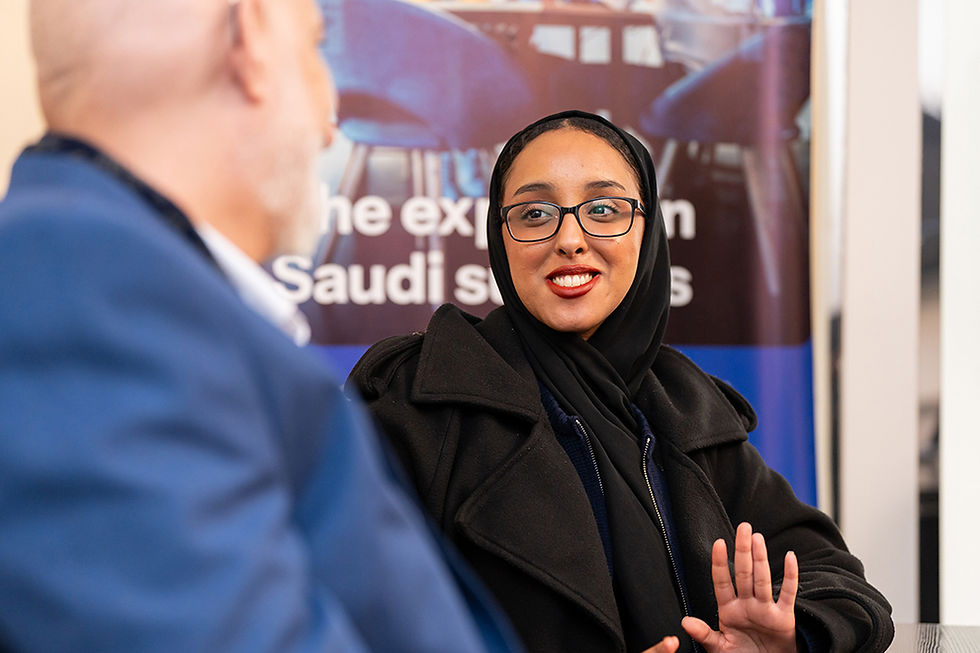
Empowering talent to drive Saudi Arabia’s vision for a skilled, inclusive workforce.
This guidance is my own rather than an official corporate recommendation, and it all depends on your own particular stage of Saudi market entry:
1. Foreign supplier with no or very few staff in KSA
Saudization does not apply at all in this situation. You have no legal requirement to employ any Saudis before you can supply goods or services from outside of KSA to the Kingdom. And there are more appropriate solutions for temporary presence in the Kingdom, such as a Business Visit Visa. Indeed, if you don’t have a Saudi legal presence then you cannot employ staff within the Kingdom, at least not without the support of a Saudi entity who can. However, some Saudi clients might ask you about your Saudization, or even request it, naively expecting all their supply chain to be obligated.
That said, it never hurts to plan ahead. So, if you expect to move to one of the stages below, then having Saudis on your team already or at least a view of who you would interview first, is recommended. And apart from readiness, you may not yet fully realise the many intangible benefits that having even one Saudi national on the team will bring to your future Saudi prospects.
2. Needing staff but no Saudi entity
Some companies will need boots on the ground and either don’t have or don’t yet want their own Saudi entity. Others find themselves unable to employ any further expatriate staff because, for whatever reason, they are also unable to employ more Saudi staff and hence don’t have the Saudization headroom needed.
This is a relatively easy fix as various companies including AEI Saudi provide Employer of Record (EoR) Services within Kingdom. These services allow them to employ the staff on your behalf. An approach which can be a useful bridge until companies have created their own Saudi entities to employ the staff or indeed as a way for a company to continue expatriate headcount growth even if Saudization has become a limiting factor i.e. you can pass on your Saudization obligation to someone else! The downside is the extra cost of using that 3rd party to employ staff on your behalf.
3. Newly created Saudi entity
You have or about just about to have a newly created Saudi entity. This is when Saudization first impacts most. But there are some initial considerations that can make life easier. First, before the entity is created make sure that you have chosen the right commercial activities on your license. Being able to compliantly deliver your goods or services is key of course, but right behind that is ensuring that you’ve also chosen activities with the most efficient Saudization percentage. (And it can be difficult to reverse course on company commercial activities if not done well first time, especially when converting across licence types). If you have chosen a Corporate Services provider to help you with entity setup, a great test of their expertise is just how much effort they put into helping you choose the very best activities for your needs, it could be the single most important thing they do for you.
Second, a Saudi national must be the first hire in order to remain Saudization compliant. This opens a number of visa blocks (usually two or three but depends on the activities), allowing the entity to onboard full-time foreign employees. However, the Saudization rates on your licence do not kick in until 5 employees are reached, seen as a grace period in the initial stages of the entity’s life.
So sometimes companies will decide that their General Manager (GM) will also be this first Saudi national to ‘kill two birds with one stone’ i.e. both the mandatory GM and first Saudi hire are one and the same. But companies doing this must ensure that their Saudi GM is both highly capable and completely reliable, as that role is critical to the continued successful operation of the entity. From understanding and navigating the Saudi regulatory environment to mitigating reputational risk at every corner, your GM hire is crucial. Which means an appropriate Saudi national for that role could be, indeed possibly should be, reassuringly expensive.
Whereas an alternative option might be to make an existing member of your parent business the GM and then hire a Saudi office coordinator, warehouse manager or so on, for your new entity. This can be a much lower cost and lower risk approach to get your business up and running.
If you don’t have an existing member of your parent business either willing or able to perform the GM role, AEI Saudi provide an Interim GM Service.
4. Established Saudi companies with many staff
It is at this point that a carefully considered Saudization strategy can be the difference between continued or even elevated Saudi success, and possible eventual market withdrawal.
And there are the typical hints and tips, for instance per scenario 2) above, companies can try to reduce the number of Saudis they need to hire altogether by placing this obligation on a partner company using their EoR service. Or it is even possible to “buy” Saudization by paying a monthly fee to the Ministry of Labor in substitute to actual Saudi employment. But both these approaches come with additional overhead.
And the real purpose and virtue of Saudization policy is to increase the number of Saudis in your employment which also means helping their development by giving them the tools they need to succeed. Because staff training becomes even more important, as it has the additional benefit of increasing retention.
And retention is critical in Saudi, even more so than in other markets. All highflying staff in Kingdom, but especially the most experienced and capable Saudi nationals, command a premium – and they know it. So making “homegrown” talent development a priority not only to try and reduce reliance on excellent but expensive external Saudi hires, but also to encourage the stickiness of your own talent is essential. Staff stay if they are happy, thriving and can see upward trajectory in their career paths with, for instance, associated training plans laid out in front of them.
4. Saudization and the rise of Saudi women in the workforce
And for my final word and final tip on Saudization – Saudi females...
Numerous Saudi companies and clients I have spoken to recently have noticed a similar unplanned, and undirected trend occurring; most new hires, particular in new entrant roles, are being filled by female applicants. Even at a Saudi HR event that I was on the panel for in Bristol (UK) earlier this year, the two large Saudi recruiting companies in the room both stated that over 80% of their new hires over the last year had been female! My own company in Saudi has experienced similar too, and it is only accelerating an existing trend here in Saudi which has seen female employment rates nearly double to now c. 36% over the last decade.
And while this might be most apparent amongst junior roles now, those staff will certainly go on to also predominate the middle management hiring soon, which we’re already starting to see at AEI Saudi too.
All helping contribute to the whole world’s slow but steady gender gap reduction
AEI Saudi has supported thousands of companies to navigate Saudization successfully, from early planning to ongoing compliance. If your business is reviewing its Saudization strategy or planning expansion into the Kingdom, our experts can guide you through every step.

